History of The Mears Newz
Introduction
The Mears Newz, often hailed as "The Smallest Newspaper in the World," was a unique publication that captured the heart of small-town life in Mears, Michigan, for over half a century. Founded in 1914 by Swift Lathers, this postcard-sized weekly newspaper chronicled local events, championed community values, and endured through decades of change until 1970. Its legacy continues today through museums, annual special editions, and a lasting impact on local history.

Founding and Early Years
On July 24, 1914, Swift Lathers launched what was initially called The Mears News from his home in Mears, a small community in Golden Township, Oceana County, Michigan. Lathers, who had moved to Mears in 1909 to teach in a one-room schoolhouse, was already working as a stringer for a Detroit newspaper. He printed the paper on a manual foot-operated press, handling every aspect himself: writing, editing, printing, and even hand-delivering copies to local subscribers while mailing others farther afield.
The name was changed to The Mears Newz sometime between 1916 and 1919, reportedly at the suggestion of a subscriber. From the outset, Lathers set the subscription price at 50 cents per year—a rate that remained unchanged for its entire run—after a local businessman jokingly offered only 25 cents, prompting Lathers to humorously adjust the rates to $1 for six months and $2 for three months. Despite skeptics predicting it wouldn't last six months, the paper quickly gained traction, starting with 300 subscribers and growing to nearly 3,000 at its peak.
Swift Lathers: The Man Behind the Paper
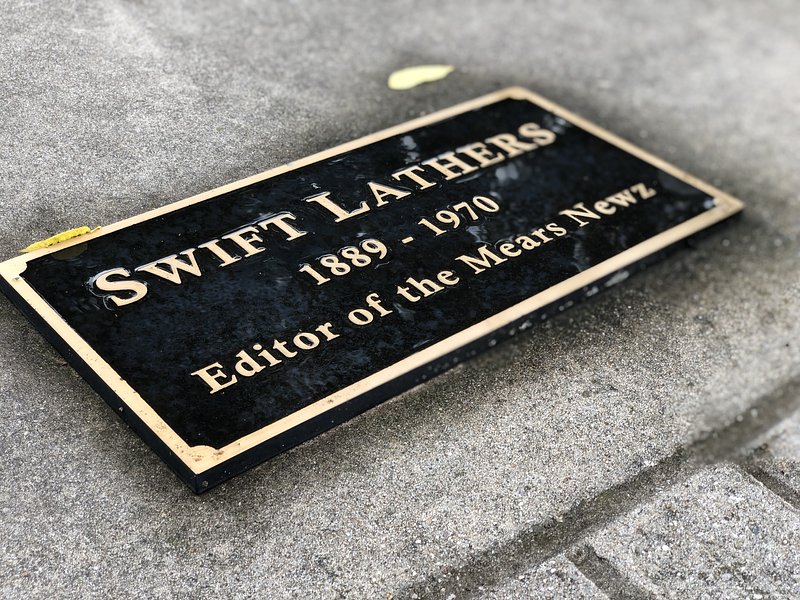
Swift Lathers, born in 1889 near Detroit, was a multifaceted individual: a schoolteacher, journalist, nature enthusiast, and self-taught lawyer who graduated from the University of Michigan Law School but never practiced. Homeschooled by his English teacher mother, Lathers was known for his eccentricity, intelligence, and mastery of the English language. He moved to Mears at age 20, drawn to the area's sand dunes and rural charm, where he taught, raised a family of six children, and built a miniature village called "The Village in the Dunes" starting in 1939.
Lathers described himself as the "editor, printer, and bottle washer" of The Mears Newz, embodying the do-it-yourself spirit of the era. He faced legal challenges multiple times for his outspoken editorials but successfully defended press freedom, including a case that reached the Michigan Supreme Court. His passion for the community shone through in every issue, as he once declared in the inaugural edition: "The Mears Newz will be devoted to the needs of Golden Township, and the best interest of Ourtown, otherwise known as Mears. The newspaper will do its part for Our Little Town."
Unique Features and Content
What set The Mears Newz apart was its diminutive size: just 5 by 7 inches, roughly the dimensions of a postcard, with only four pages. Published every Friday, it focused on positive, wholesome stories about everyday life in Mears—visitors, lost pets, minor mishaps, and community triumphs—rather than sensational news. Editorials advocated for individual rights, rural schools, and social causes, often starting with quirky headlines like "Parsnips Are Ripe in the Land of Mears" or "Kite Strings Are Ripe in the Land of Mears."
Examples of its charming, folksy content include notes such as: "Kathryn Doub gave a lot of kids in her English class an E. She better watch out or she will have them all to teach over again next year" (1937), and "Pearl Hunter likes horseradish on toast. She also likes the flavor in her salads" (1956). Lathers' own poetry, like "The Harvest Moon," frequently appeared, adding a personal touch. As circulation boomed to over 2,700 subscribers across 38 states, Lathers once culled his list by keeping only names from D to S in the alphabet to keep things manageable.
Challenges and Achievements
Operating a one-man newspaper wasn't without hurdles. Lathers printed each issue by hand, with his children helping to fold them, and managed distribution personally. He navigated legal battles to protect his right to publish, emerging victorious and reinforcing principles of free speech. The paper's longevity—56 years without missing an issue—earned it recognition, including Lathers' induction into the Michigan Journalism Hall of Fame. By the 1940s, it had subscribers worldwide, a testament to its endearing appeal.
Legacy and Modern Day
The Mears Newz ceased regular publication upon Lathers' death in 1970, but its spirit endures. Lathers' 1892 home in Mears was donated to the Oceana County Historical and Genealogical Society, which transformed it into a museum housing his original printing press, newspaper archives, and other artifacts. The society's historic park includes gardens, antique exhibits, and remnants of "The Village in the Dunes."
A life-size bronze statue of Lathers, often decorated with a red necktie, stands in Mears as a tribute. In 2014, the paper's centennial was celebrated with a "Pleasant Afternoon" event. Today, special editions of The Mears Newz are published annually in connection with the Golden Fair, highlighting past events and keeping the tradition alive. This tiny newspaper remains a symbol of community journalism and the enduring charm of Mears, Michigan.